Home › Commercial Asphalt Resurfacing & Overlays
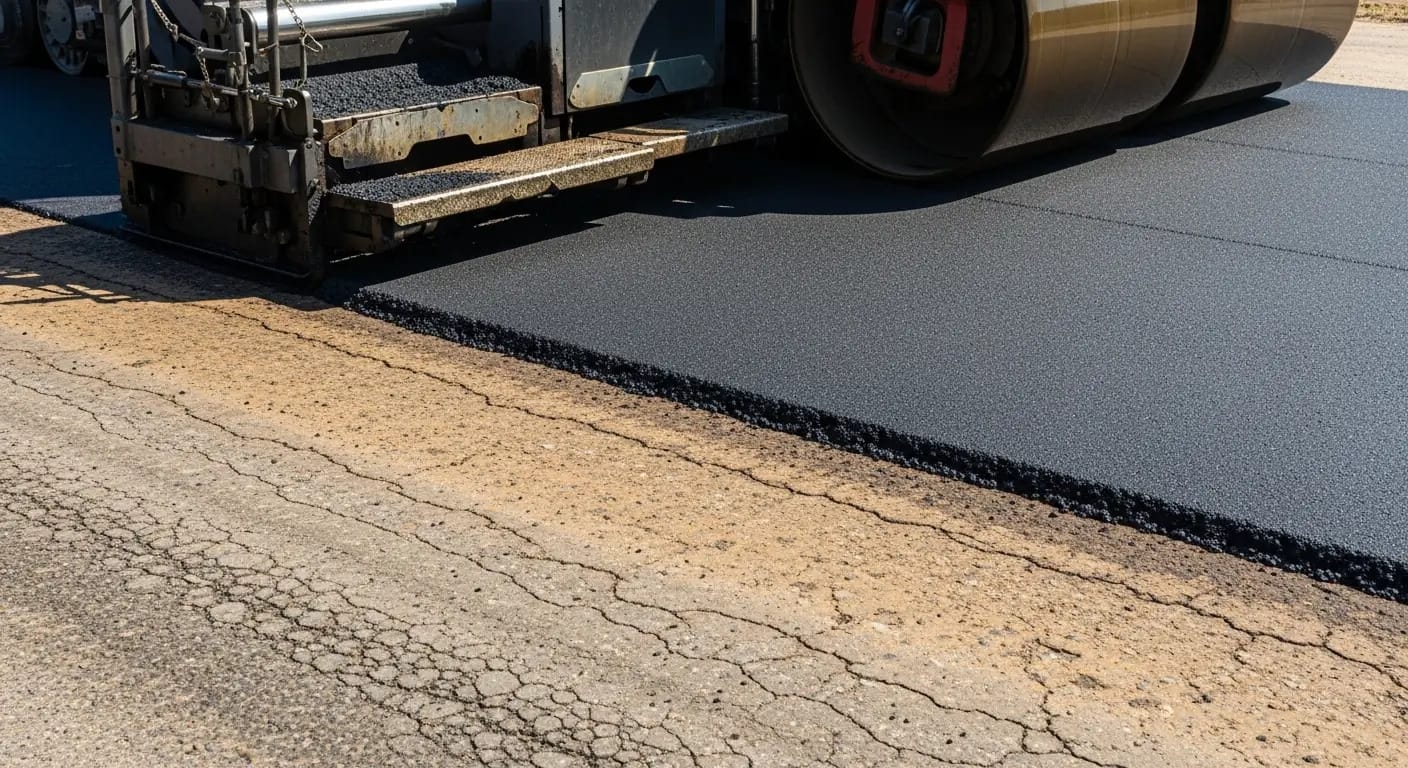
Refresh tired, weathered pavement with commercial asphalt resurfacing in San Antonio, TX. Ideal for parking lots and drives with a solid base but worn top layer, overlays provide a smooth, new driving surface at a lower cost than full replacement. Our team performs needed repairs, leveling, and milling before installing a high quality asphalt overlay.
Precision Asphalt San Antonio provides professional commercial asphalt resurfacing throughout San Antonio, TX, Texas and the surrounding area. Our licensed, insured crew delivers safe, clean, on-time work with a free estimate before anything begins. Call (830) 268-0934 or request your free quote.
Commercial Asphalt Resurfacing in San Antonio: When It Makes Sense
Commercial asphalt resurfacing is the middle ground between constant patching and a full tear out. For many parking lots, shopping centers, and industrial yards in San Antonio, a properly done overlay can add 8 to 15 years of life without the cost of complete reconstruction.
At Precision Asphalt San Antonio, we first look at the base of your pavement, not just the surface cracks. Resurfacing only works if the foundation is mostly solid. If you have widespread alligator cracking, standing water that does not drain, or soft spots that move under truck traffic, we will recommend fixing those structural issues before any overlay. If someone tells you they can just pave over failing areas for cheap, expect that failure to return quickly.
Typical properties that are good candidates for commercial asphalt resurfacing include retail centers with moderate traffic, medical offices, restaurants, churches, apartments, and light industrial sites. Heavy truck yards and trash truck routes can be resurfaced too, but they usually need thicker overlays, stronger mixes, and extra attention to the base. We look at how delivery trucks move, where vehicles turn sharply, and where people brake hard to determine what kind of overlay and thickness your pavement really needs.
San Antonio’s heat and sun are hard on asphalt. Surfaces oxidize, turn gray, and become brittle faster than in cooler climates. Resurfacing replaces that tired top layer with new, flexible asphalt mix that can handle daily temperature swings and summer highs. It is not just about looks. A fresh surface protects the base from water getting in through cracks, which is what causes a lot of the deep failures we see after big thunderstorms.
How Commercial Asphalt Resurfacing & Overlays Are Actually Done
A solid resurfacing or overlay project follows a specific process. Precision Asphalt San Antonio does not just show up and start paving. We start by walking the entire property with you. We mark out problem areas like potholes, rutting in drive lanes, and low spots that hold water. If the damage in one area is too deep, we plan a full-depth removal there before any overlay.
The crew begins by milling or grinding down high spots and transitions at entrances, dumpster pads, and around existing concrete. This keeps the new overlay from creating a lip that cars scrape on or that traps water. In some cases, we mill the entire surface to create a clean, even base for the new asphalt. Badly cracked or sunken sections get saw-cut, removed, and rebuilt with new base rock and hot mix so those failures do not reflect through the overlay.
Next, we clean the surface thoroughly. Dirt, dust, loose rock, and oil spills keep the new asphalt from bonding. We use mechanical sweepers and blowers, and on heavy oil spots we apply a special primer or remove the contaminated asphalt completely. Then we spray a tack coat, which is a thin layer of asphalt emulsion that glues the old surface to the new overlay. Skipping tack or putting it down too thin is a common shortcut that leads to slipping and early delamination.
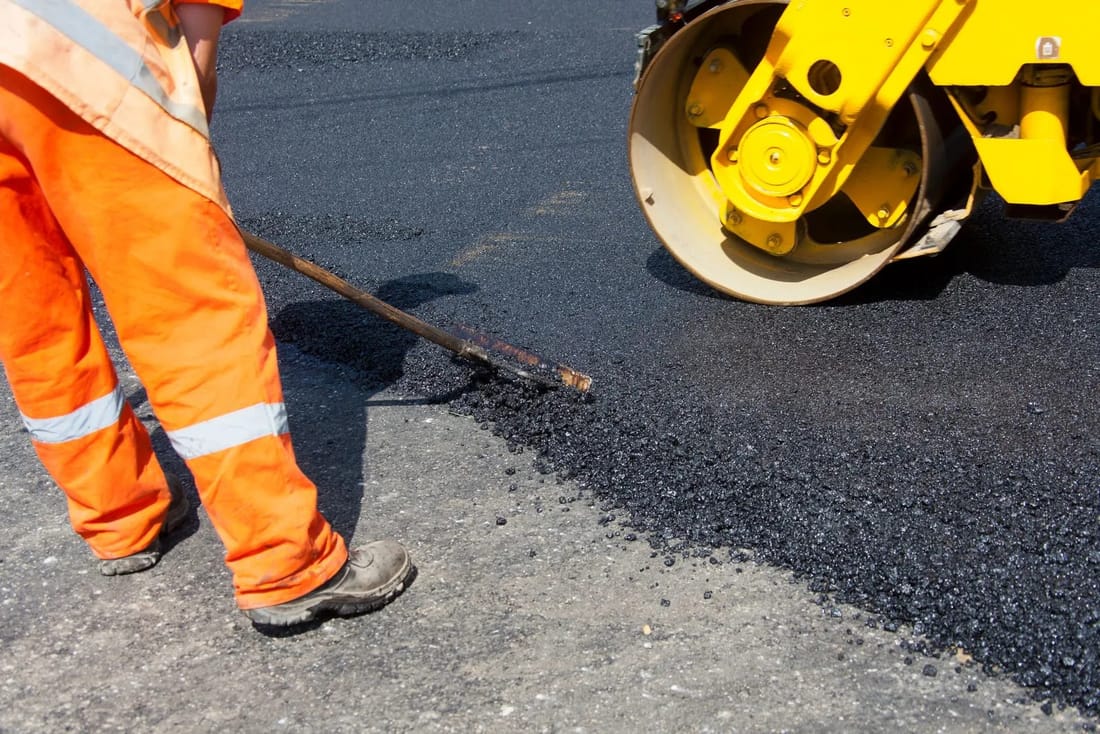
The overlay itself is hot mix asphalt, laid at a controlled thickness using pavers and compacted in multiple passes with steel and rubber-tire rollers. Typical commercial overlays in San Antonio range from 1.5 to 3 inches thick. High traffic or heavy truck lanes may get extra thickness or a more robust mix. After compaction, we check joints, edges, and drains to be sure water flows off the pavement and away from buildings. Finally, once the asphalt has cooled and cured enough, we return to stripe the lot, mark fire lanes, and add any wheel stops or signage you need so the property is ready for tenants and customers.
Material Choices, Overlay Thickness, and What Affects Cost
Commercial asphalt resurfacing cost depends on more than square footage. Precision Asphalt San Antonio explains these pieces up front so you know what is driving the numbers.
Overlay thickness is one of the biggest factors. A light 1.5 inch overlay costs less per square foot than a 3 inch overlay, but it will not last as long under heavy use. For restaurant drive-thrus, schools with bus loops, and warehouse docks, we often recommend thicker overlays or even reinforced sections where trucks turn and stop repeatedly. On lighter-use parking stalls, a thinner overlay can be appropriate, and that is how we control cost without risking failure.
Mix design matters too. Standard parking lot mixes work fine for cars and light trucks. For trash truck routes, food delivery docks, and industrial plants, we use mixes with a tougher aggregate structure and more stable binders that handle higher loads and heat. This is especially important in San Antonio where summer pavement temperatures can exceed 140 degrees. Choosing the wrong mix can lead to rutting and shoving in just a few seasons.
Site prep and repairs are another major cost driver. If your lot only needs minor crack repair and a leveling course, costs stay lower. If we find soft subgrade, poor drainage, or broken concrete around inlets that must be fixed, that adds to the project but prevents wasting money on an overlay that will not last. Drainage corrections, such as reshaping near doors or adding valley gutters, are worth considering during resurfacing since the equipment is already on site.
Staging also influences price. If your lot has to stay partially open and we work in many small phases around active traffic, production slows, and unit costs rise. If you can close larger sections for a day or two, we can pave faster and more efficiently. We work with property managers and business owners in San Antonio to find the balance between business disruption and project cost.
Planning Around San Antonio Weather, Traffic, and Business Operations
San Antonio’s climate affects when and how commercial asphalt resurfacing should be scheduled. Hot, dry months are usually best for overlay work. Late spring through early fall gives us warm ground temperatures and longer workdays, which help the asphalt compact and cure properly. We can work in cooler months, but we have to watch cold fronts and rain closely. Laying hot mix over cold, damp pavement is a shortcut that leads to poor bonding and early cracking.
Rain is another concern. If the surface is wet, the tack coat will not bond correctly and moisture can get trapped under the new overlay. Precision Asphalt San Antonio schedules paving days around the forecast, and if we see a strong chance of rain during or right after paving, we will adjust. This might be inconvenient, but it saves you from long-term problems like stripping and delamination.
Traffic control and access planning are just as important as the paving itself. Before we start, we map out phases that keep essential access open for customers, tenants, deliveries, and emergency vehicles. For shopping centers, this often means resurfacing drive lanes and sections of parking at night or on lower-traffic days. For office parks and industrial sites, we might concentrate work on weekends or off-shift hours. We provide cones, barricades, and clear signage so people know where to park and how to move safely during construction.
We also help you plan around trash pickup, deliveries, and scheduled events. Fresh asphalt needs a specific amount of time before heavy trucks or tight turning movements drive on it. In San Antonio’s heat, light traffic can often return within several hours, but heavy trucks and sharp turns should wait longer. We give you a realistic traffic reopening schedule and coordinate with your haulers and vendors so they do not drive on the pavement too early.
Common Problems, How We Prevent Them, and What to Ask Before Hiring
There are a few recurring problems we see on commercial asphalt resurfacing projects in San Antonio: overlays laid over failed base, poor drainage planning, and thin overlays sold as a quick cosmetic fix. Precision Asphalt San Antonio addresses these during the evaluation stage, which is why our site visit is more than a quick visual glance.
Reflective cracking is a big concern. If deep cracks or alligator areas are left as-is, those cracks will usually show back through your new overlay in a year or two. We prevent that by cutting out and rebuilding the worst sections, routing and sealing working cracks, and sometimes using a leveling course to bridge minor irregularities. In extreme cases, we may recommend fabric interlayers or a more extensive reconstruction instead of a simple overlay.
Drainage problems are another issue. A smooth new surface will not fix poor slope. If water already ponds in certain areas, overlaying without correction can make it worse or simply move the pond a few feet away. We evaluate slopes with levels and, when needed, adjust grades at inlets, curb lines, and door approaches while we pave. Getting water off and away from the asphalt is one of the best long-term protections you can buy.
Before you hire any contractor for commercial asphalt resurfacing, ask about their plan for tack coat, joint construction, and compaction. Ask what mix design and overlay thickness they are proposing for high traffic lanes versus parking stalls. A detailed proposal from Precision Asphalt San Antonio will spell out these details, including where we will perform full-depth repairs instead of just covering everything with new mix. This level of planning is what separates a short-lived cosmetic overlay from a resurfacing project that actually holds up to San Antonio traffic and weather.
If you want straightforward answers about whether resurfacing or full replacement is right for your property, we will walk the lot with you, mark up a plan on-site, and explain what we recommend and why. That way you can budget confidently and choose an approach that matches how your pavement is truly used, not just what looks good on day one.