Home › Commercial Gravel-to-Asphalt Conversions
Upgrade your property with commercial gravel to asphalt conversions in San Antonio, TX. We transform dusty, washboard gravel lots and roads into clean, durable asphalt surfaces that are easier to plow, stripe, and maintain. Our team evaluates drainage and base, then paves a professional blacktop surface that enhances both function and appearance.
Precision Asphalt San Antonio provides professional commercial gravel to asphalt throughout San Antonio, TX, Texas and the surrounding area. Our licensed, insured crew delivers safe, clean, on-time work with a free estimate before anything begins. Call (830) 268-0934 or request your free quote.
Commercial gravel to asphalt conversions for San Antonio properties
If your commercial lot is still gravel, you already know the headaches: dust on cars and storefronts, potholes after every heavy rain, and constant regrading just to keep the surface usable. Precision Asphalt San Antonio focuses on turning busy gravel lots, drives, and access roads into durable asphalt surfaces that stand up to South Texas traffic and heat.
We work with shopping centers, medical offices, industrial yards, churches, small retail strips, and multi-tenant properties across San Antonio, TX. The goal is simple: convert your gravel surface into a smooth, well-drained, striped asphalt lot that looks professional, is easier to maintain, and holds up against our 100-plus degree summers and intense stormwater events.
Every commercial gravel to asphalt project starts with how your property is used. We look at traffic patterns, delivery truck routes, dumpster locations, and areas where water already pools. That usage plan determines the pavement design, asphalt thickness, and drainage layout, so you do not end up with rutting in loading zones or standing water at parking stalls. This is not a generic overlay. It is a purpose-built conversion for your specific site in San Antonio.
How commercial gravel to asphalt conversions actually work
A proper gravel to asphalt conversion is more involved than simply paving over what you already have. At Precision Asphalt San Antonio, we start with a site assessment using rod probes and test pits to check your existing base depth, compaction, and subgrade soil type (San Antonio has a mix of caliche, expansive clays, and fill). We document soft spots, standing water areas, and existing slopes.
Next we shape and regrade the gravel. We bring in motor graders, skid steers, and compactors to cut high spots and fill low spots so water drains toward planned inlets or to the street, while staying within City of San Antonio drainage rules. If your existing base is too thin, we add crushed limestone base and compact it to 95 percent or better of Standard Proctor using vibratory rollers. This base step is critical; if it is skipped, the asphalt will follow every rut and pothole.
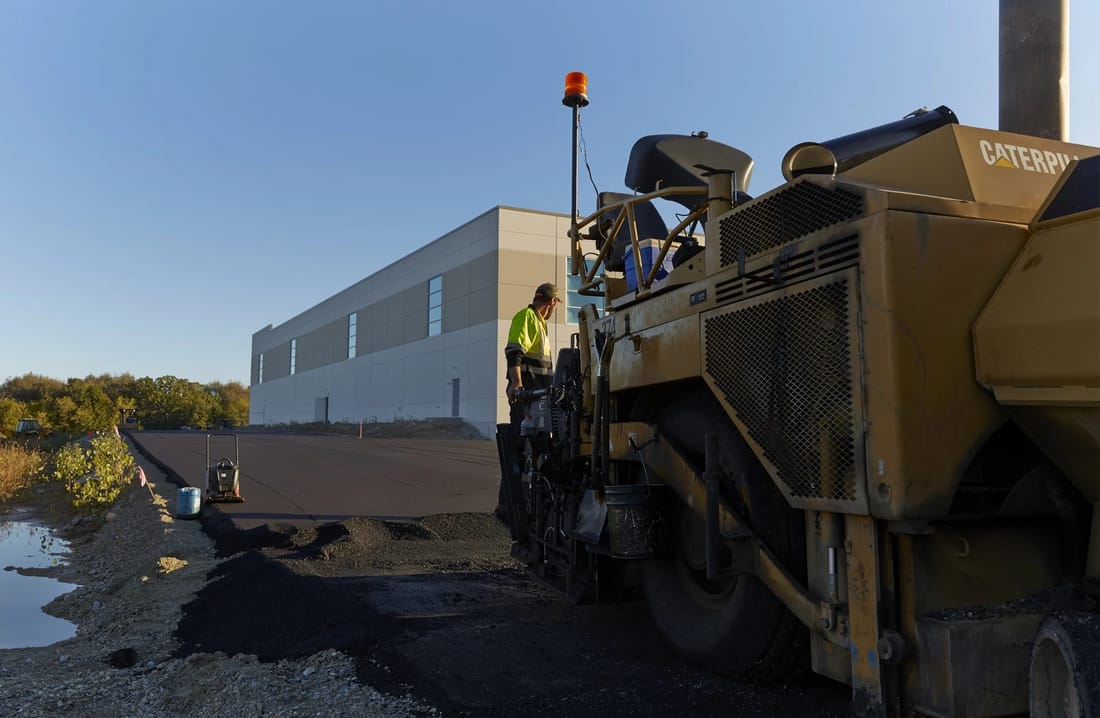
Once the base is stable and shaped, we apply tack where needed and install hot mix asphalt using commercial pavers. Typical commercial gravel to asphalt conversions in San Antonio use 2 to 3 inches of asphalt for car parking with thicker sections for drive lanes and heavy truck areas. We compact each lift with steel drum and pneumatic rollers to achieve the specified density and a smooth finish. After cooling, we add markings, wheel stops where required, and any signs you need for ADA and traffic control.
Design options for heavier traffic, drainage, and appearance
Commercial gravel to asphalt conversions are not one size fits all. Precision Asphalt San Antonio offers different pavement designs depending on how your property works day to day. For light retail and office parking, we typically recommend a base-enhanced section with 6 to 8 inches of crushed base and 2 to 3 inches of hot mix asphalt. For loading docks, dumpster pads, and semi-truck routes, we increase both the base thickness and the asphalt depth, or add reinforced concrete pads at turn points to prevent shoving.
Drainage is a major design factor in San Antonio, where short, intense storms are common. During the conversion, we correct grades so water leaves the pavement quickly. This may include valley gutters, trench drains at doors, or tying into existing on-site storm pipes. If your gravel area currently sends water onto a neighbor's property or the sidewalk, we address that in the layout so you are not dealing with complaints or violations later.
For appearance and function, we can plan traffic flow with directional arrows, designated delivery lanes, and fire lane striping that meets San Antonio Fire Department requirements. We also provide layout options for ADA-compliant accessible parking, including van spaces, cross-hatching, and compliant slopes in front of the main entrance. If you operate at night, we coordinate striping colors and reflector placement with your lighting plan so drivers can see drive lanes and pedestrian crossings clearly.
Local permitting, codes, and accessibility requirements in San Antonio
Converting gravel to asphalt on a commercial property in San Antonio often triggers review by the City, especially if you are expanding parking or changing drainage patterns. Precision Asphalt San Antonio assists with determining whether a site development permit, drainage review, or TxDOT access approval is needed, particularly if your driveway ties into a state-maintained road like Loop 410, I-35, or US 281.
We pay close attention to San Antonio development code related to parking layout, fire lane widths (typically 24 feet minimum in many cases), and clear access around hydrants and FDC connections. If your gravel lot predates current standards, the conversion is a chance to correct non-compliant drive aisle widths, driveway radii, and backup distances so you do not run into issues during future inspections or refinancing.
ADA compliance is often overlooked in simple resurfacing jobs, but a serious concern in a true commercial gravel to asphalt conversion. We design slopes at accessible stalls so they stay within the 2 percent maximum and make sure there is an ADA-compliant route from parking to your main accessible entrance. This may require minor concrete ramp work or adjustments to existing sidewalks. By addressing this during design, you reduce the risk of accessibility complaints or legal exposure after your new pavement is installed.
What affects cost for commercial gravel to asphalt projects
The cost of a commercial gravel to asphalt conversion depends on site-specific factors, not just square footage. At Precision Asphalt San Antonio, the first driver is base condition. If your existing gravel has been well maintained and already has a thick, compacted base, we can reuse much of it, which saves money. If the lot has deep ruts, pumping mud, or mixed construction debris, we may need to remove material, rebuild the base, or undercut soft areas with geotextile stabilization.
Thickness is another major cost factor. Parking areas for passenger vehicles can often use a thinner asphalt section than loading zones or routes used by garbage trucks and delivery semis. We explain the options clearly so you are not paying for highway-level pavement where you do not need it, but you are also not under-building in heavy-use areas that will fail early. Material prices, especially liquid asphalt, fluctuate with fuel costs, so we time procurement carefully and hold pricing during the proposal window wherever possible.
Access and phasing also influence cost. Lots that can be closed entirely for a day or two are more efficient than projects that must be done in many small phases to keep customer parking open. Night work, weekend requirements, and tight working areas add to labor and traffic control costs. We walk the site with you to decide on a phasing plan that balances budget, tenant needs, and safety, and we spell those tradeoffs out in writing before you commit.
Common issues and how Precision Asphalt San Antonio prevents them
Poorly planned gravel to asphalt conversions often show problems within the first year: new potholes where water collects, settled areas at dumpster pads, or grooves where trucks constantly turn. Precision Asphalt San Antonio focuses on three main risk points: subgrade strength, water management, and traffic concentration.
For subgrade strength, we test suspect areas during prep and do not hesitate to undercut soft soils, add geogrid, or increase base thickness where needed. This targeted reinforcement costs less than overbuilding the entire lot but stops localized failures where they are most likely. In older San Antonio infill sites, we often find buried rubble or construction waste under gravel; we remove these inclusions so they do not create voids later.
Water management issues usually come from ignoring micro-grades. During grading, our crew uses string lines, lasers, and on-the-ground water tests so the finished asphalt sheds stormwater toward planned collection points instead of creating birdbaths in driving lanes. We also pay attention to transitions at door thresholds, dock doors, and existing concrete so water does not run into buildings.
Traffic concentration problems show up where semis, delivery trucks, or garbage trucks repeatedly turn or stop. Rather than paving everything the same, we reinforce those exact spots with thicker asphalt sections or concrete pads. We also suggest small layout changes, like adjusting dumpster locations or delivery routes, so heavy vehicles travel on the strongest pavement. This practical, use-based approach helps commercial property owners in San Antonio get the longest life and lowest total cost out of their gravel to asphalt conversion.