Home › Industrial and Heavy-Duty Asphalt Paving
Handle heavy trucks and equipment with confidence using our industrial asphalt paving in San Antonio, TX. We build thick, reinforced asphalt sections for loading docks, truck yards, and high traffic commercial sites. Our team designs pavement structures to match axle loads and turning movements so your surface resists rutting and premature failure.
Precision Asphalt San Antonio provides professional industrial asphalt paving throughout San Antonio, TX, Texas and the surrounding area. Our licensed, insured crew delivers safe, clean, on-time work with a free estimate before anything begins. Call (830) 268-0934 or request your free quote.
Industrial Asphalt Paving Built for Heavy Loads in San Antonio
Industrial asphalt paving is not the same as putting in a basic parking lot. The traffic is heavier, the loads are higher, and the failure costs are bigger. At Precision Asphalt San Antonio, we design and build pavements that handle 18‑wheelers, forklifts, loaded trailers, and constant turning without rutting or breaking apart.
For industrial sites in San Antonio, TX, we start every project by looking at how the pavement will actually be used. We ask about axle weights, turning areas, where trucks queue, where containers are stored, and what kind of equipment crosses the surface every day. That information, combined with soil conditions and drainage, drives the pavement design. We are not guessing at thickness. We base it on traffic loads, subgrade strength, and local performance history on similar facilities in Bexar County.
Our focus is simple. Build a surface that stands up to heat, weight, and time, and minimize downtime for your operation.
How We Design Heavy‑Duty Asphalt Pavements
Real industrial asphalt paving starts with design. Precision Asphalt San Antonio begins with a site evaluation, including test holes or cores if there is existing pavement. We look at the native soil, existing base, and any prior failures such as pumping, cracking, or ponding water. For new construction, we review your civil plans and, if needed, coordinate with your engineer to refine pavement sections for heavy load areas.
We then determine different pavement zones on your property. For example, truck lanes and loading docks usually get thicker asphalt and stronger base than car parking or employee drive lanes. A common configuration in San Antonio might be 8 to 10 inches of compacted base with 3 to 5 inches of hot mix asphalt in heavy truck lanes, and lighter sections in car‑only areas. We adjust those numbers based on your soil support values and traffic projections.
Mix selection matters as much as thickness. For industrial work, we typically specify a coarse, high‑stability hot mix with a performance grade binder suited to South Texas heat. This helps resist rutting when your asphalt sits in 100‑degree sun while loaded trucks sit or turn. Where forklifts or tight turning movements are constant, we may recommend a slightly stiffer mix and tighter joint layout to reduce shear damage.
Step‑By‑Step: Our Industrial Paving Process
Once the design is locked in, Precision Asphalt San Antonio follows a structured build process so the pavement performs the way it was engineered.
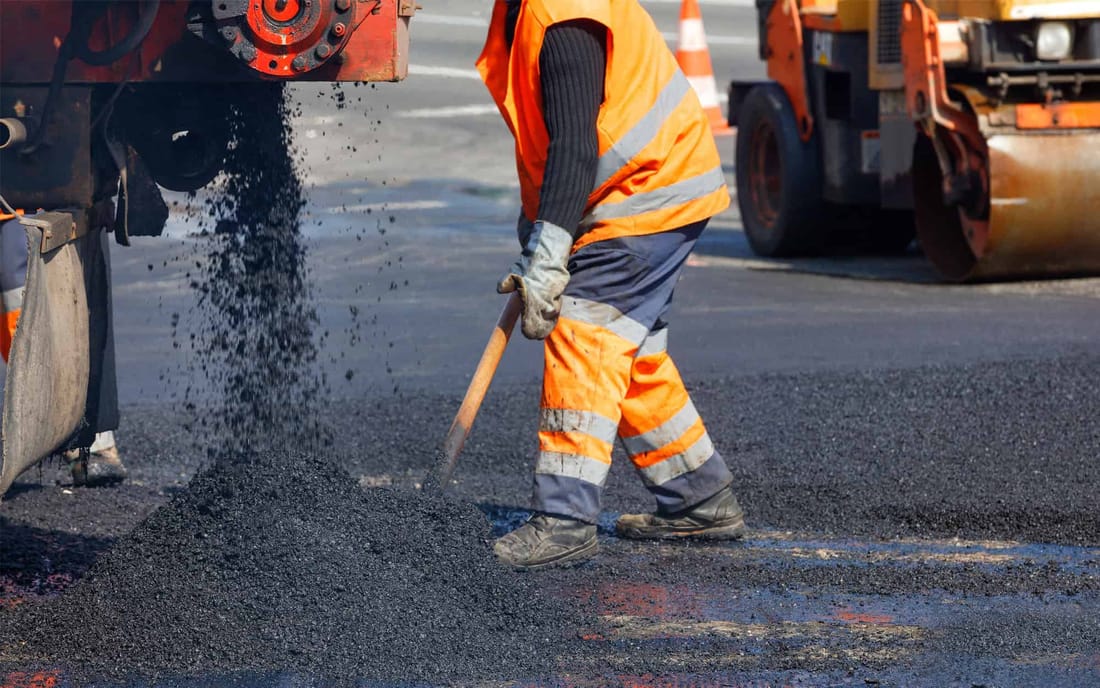
1. Site prep and proof rolling: We strip any failing asphalt or unsuitable material and grade for proper drainage away from buildings, docks, and loading areas. A heavy proof roll with loaded trucks or rollers reveals soft spots. Any pumping or deflection gets excavated and rebuilt so you are not paving over a weak pocket.
2. Base installation and compaction: For industrial projects we almost always use a thick, well‑graded crushed limestone base, common in the San Antonio area. We place it in lifts and compact with vibratory rollers to meet density targets. Poor base compaction is one of the main reasons heavy‑duty pavements fail early, so we spend the time here rather than rushing to blacktop.
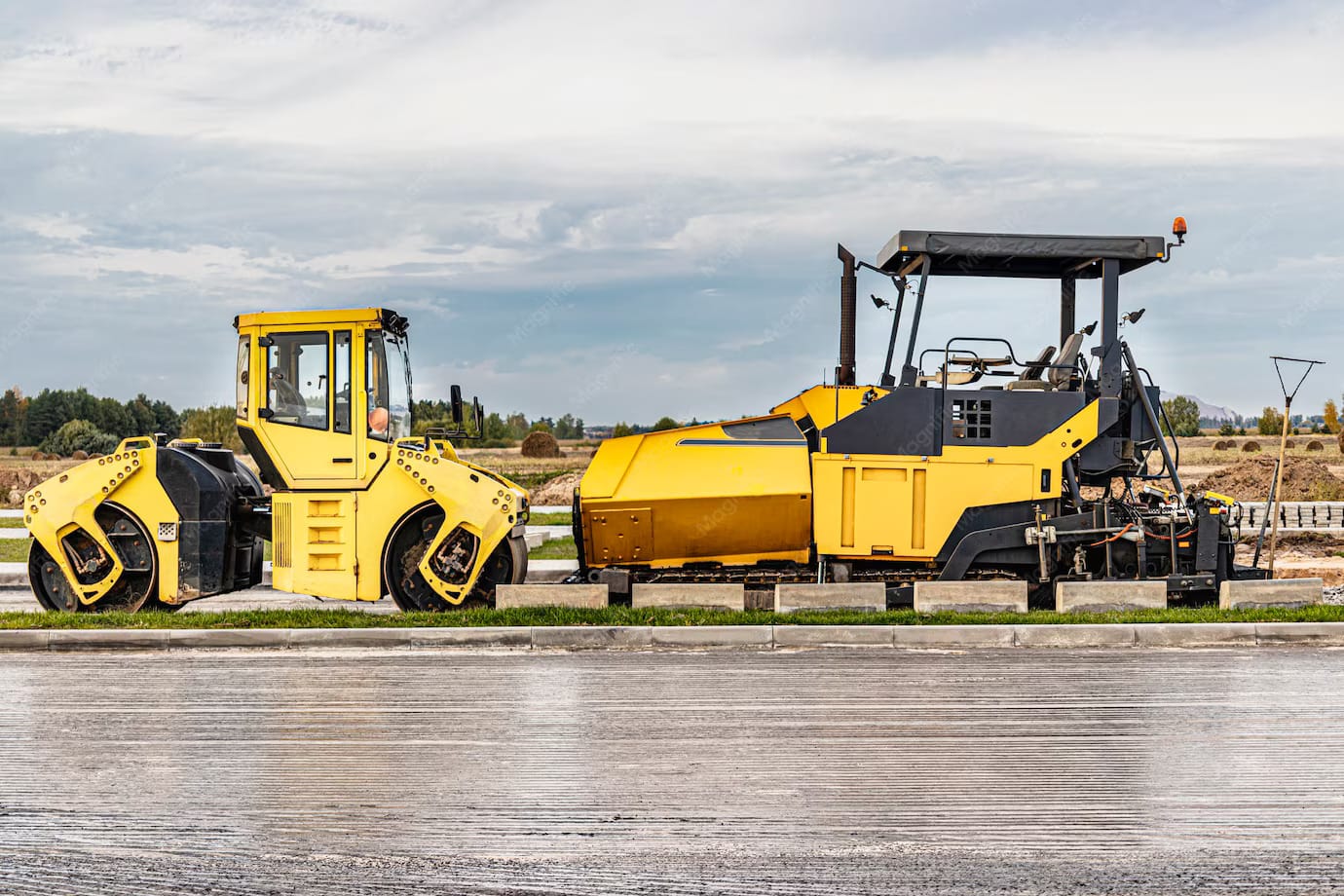
3. Tack coat and asphalt placement: We apply a tack coat between layers for bond, then place the industrial hot mix with a paver for consistent mat thickness. Truck lanes and dock approaches are usually paved in at least two lifts so we can compact each layer fully. We use steel drum and pneumatic rollers in a set rolling pattern to reach target density and close the surface.
4. Joint detailing and transitions: Heavy loads tend to attack weak joints and transitions. We pay particular attention where asphalt meets concrete dock aprons, trench patches, or existing pavement. Joints are sawcut or formed straight, well tacked, and compacted tightly to reduce future separation.
5. Striping and phasing: On active industrial sites, we often phase the work so you can keep part of the yard or drive lanes open. We coordinate staging areas, curing times, and striping so your operations are interrupted as little as possible.
What Drives Cost on Industrial Asphalt Paving Projects
Industrial asphalt paving is an investment, and San Antonio property managers usually want to know quickly what drives the price. The biggest factors are pavement thickness, base requirements, drainage improvements, and access or phasing complexity.
Thickness and base: Heavier truck traffic means more structure. A yard that sees occasional delivery trucks might only need a moderate section, while a distribution center with constant 18‑wheeler traffic will require a much thicker asphalt section on a stronger base. Material quantities increase quickly when you add even one or two inches across a large yard, so we walk you through the design choices before you commit.
Subgrade and drainage: If your site has clay pockets or holds water after storms, we may recommend undercutting, cement treatment, or more base depth. That adds cost up front but prevents pumping, potholes, and slab movement later. In San Antonio, where intense summer storms are common, getting water off and away from your pavement is crucial. Regrading, adding inlets, or tying into existing storm systems can be part of the proposal.
Operational constraints: Working around 24‑hour operations, tight security, or limited access areas can slow production and increase cost. Night work, weekend work, or extensive traffic control also affects pricing. At Precision Asphalt San Antonio we spell these items out line by line so you understand where your money is going and where there might be options.
San Antonio‑Specific Considerations: Heat, Codes, and Inspections
Industrial asphalt in San Antonio has to handle both intense heat and heavy storms. We account for our local climate in mix and thickness recommendations. Softer or under‑designed mixes that might work in cooler regions can rut quickly here under trucks. That is why we lean on performance grade binders appropriate for South Texas and larger aggregate gradations for stability in heavy‑duty areas.
Local codes and permits vary depending on whether your property is inside San Antonio city limits or in the county. Many industrial projects require right‑of‑way permits for drive approaches, drainage approvals, and sometimes inspections of base and asphalt thickness. Precision Asphalt San Antonio is familiar with local permitting offices and can coordinate required inspections when work touches public streets or drainage structures.
Many industrial parks and privately managed facilities also have their own pavement standards, especially near fire lanes, dock aprons, and shared access drives. We review any park covenants or design standards you provide to ensure the new pavement section will pass property management review and future sale or refinance inspections.
Common Industrial Pavement Problems and How We Prevent Them
When industrial asphalt fails, it usually fails the same few ways. Understanding what causes those problems is the key to preventing them. Precision Asphalt San Antonio sees rutting, alligator cracking, edge breakdown, and joint failure most often on local industrial sites.
Rutting and shoving typically come from under‑designed mixes, inadequate thickness, or poor compaction in high load paths. We address this with stiffer, well‑graded mixes, thicker sections in wheel paths, and strict rolling patterns verified in the field. Where trucks turn sharply or push trailers sideways, we may recommend thicker sections, reinforcing at the edge, or even concrete pads in the tightest turn spots.
Alligator cracking is usually a sign that the base or subgrade is failing, not just the surface. To prevent this, we proof roll aggressively, fix soft spots, and avoid paving over questionable base just to hit a deadline. For existing facilities where failure has already started, we may suggest full‑depth reclamation or remove‑and‑replace in the worst zones, then overlay the entire area so loads are carried by a consistent structure.
Edge breakdown often appears along the outside of truck lanes where heavy wheels run near an unsupported edge. We design industrial pavements with proper edge support, such as wider paved shoulders, thicker edges, or concrete curb where appropriate. Joints are detailed and compacted so water does not penetrate and weaken the edge from below.
By taking these issues into account during design and construction, we extend pavement life and reduce the need for disruptive repairs in the middle of your busy season.