Home › Road, Street, and Municipal Paving
Build smooth, durable traffic routes with professional road paving in San Antonio, TX. We construct and resurface city streets, subdivision roads, and private thoroughfares with attention to grading, base strength, and drainage. Our crews use modern equipment and proven asphalt mixes to deliver long lasting pavements that handle daily traffic demands.
Precision Asphalt San Antonio provides professional road paving throughout San Antonio, TX, Texas and the surrounding area. Our licensed, insured crew delivers safe, clean, on-time work with a free estimate before anything begins. Call (830) 268-0934 or request your free quote.
San Antonio Road Paving Specialists for Public & Private Projects
Road, street, and municipal paving in San Antonio needs to stand up to intense sun, sudden storms, and heavy traffic. Precision Asphalt San Antonio focuses specifically on building and restoring pavements that hold up in our local conditions, from neighborhood streets and ranch roads to city connectors and subdivision entrances.
When you call us, we start with a site visit, not a guess from a map. We walk the alignment, look at drainage paths, check existing base conditions, and note the types of vehicles that will be using the road. A cul-de-sac that sees school buses and garbage trucks needs a different design than a light residential lane or a private access road to a commercial yard.
We work with HOAs, small municipalities, general contractors, and property owners who manage their own streets outside the city system. Our team is used to coordinating with local inspectors and utility companies so that paving is done at the right time, after underground work is complete and before traffic starts causing premature damage.
Our goal is simple: deliver a road surface that drivers barely notice because it is smooth, quiet, and reliable. If you are dealing with rutting, standing water, or constant pothole patches, we help you get to the root cause rather than just covering it up.
How We Design a Long‑Lasting Road or Street in San Antonio
Good road paving starts long before the first load of asphalt arrives. Precision Asphalt San Antonio designs each project around three main factors: traffic, subgrade strength, and drainage.
Traffic: We confirm the expected daily traffic and, more importantly, the percentage of heavy vehicles. A neighborhood street that sees occasional delivery trucks can often use a standard two‑course asphalt design. A route that carries concrete trucks or oilfield equipment may need thicker asphalt, a stronger base, or even a stabilized base layer.
Subgrade strength: San Antonio soils can vary a lot over a short distance, from firm limestone fragments to expansive clay. We probe and test the existing ground, then decide whether it can be compacted and used as is, needs to be undercut and replaced with select fill, or should be stabilized with cement or lime to keep it from pumping and shifting.
Drainage: Local roads fail early when water has nowhere to go. We look at ditch slopes, culvert sizing, curb and gutter layout, and inlet placement. For private streets without storm drains, we often recommend gentle crowned sections and ditch improvements so rain is moved away from the pavement quickly.
Based on these conditions, we recommend asphalt thickness, base thickness, and mix types that balance performance with budget. We document these recommendations so owners and city reviewers can see exactly what they are getting and why.
Our Road Paving Process, Step by Step
Precision Asphalt San Antonio follows a consistent, field‑tested process so that your road or street project is built correctly the first time.
1. Layout and grading: We verify alignment and elevation against plans or agreed stakes. Our crews grade the subgrade so that water will flow to ditches, inlets, or existing tie‑ins. At this stage we refine the crown or cross slope to fit how the road will actually be used.
2. Subgrade preparation: We compact the native soil in layers using vibratory rollers. In weaker areas, we may undercut soft spots, bring in select fill, or add stabilization agents. The goal is to eliminate soft pockets that later turn into potholes and dips.
3. Base installation: Most local roads use a flexible crushed limestone base. We spread it in lifts, moisture condition it, then compact to the specified density. Once compacted, we proof roll with a loaded truck to reveal any flexing or pumping. Any problem areas are corrected before we move on.
4. Tack coat: On top of the base, or between asphalt layers, we apply a light tack coat. This asphalt emulsion helps each layer bond so the pavement acts as a single system instead of separating under traffic.
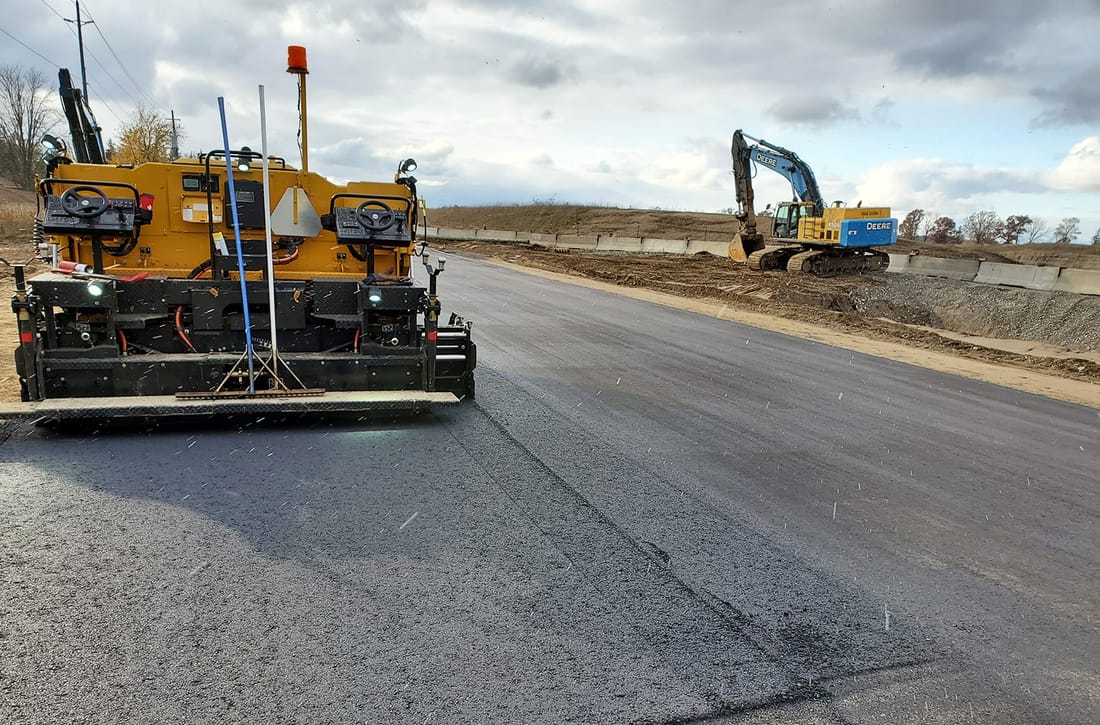
5. Asphalt paving: Using a paver, we place the asphalt mix at the right temperature and thickness. Our operators adjust the screed for proper crown and transitions at driveways or intersections. We then compact with steel and pneumatic rollers in a specific sequence so that density meets spec without leaving roller marks.
6. Joints, tie‑ins, and finishing: We pay special attention to joints where new pavement meets existing roads or concrete. Proper cutting, cleaning, and tacking at these joints greatly reduces future cracking. We finish by checking all inlets, manholes, and utility covers for smooth transitions.
Once cured, we can apply striping and signage so the road is ready for traffic and compliant with local standards.
Material Options and Mix Types for San Antonio Streets
Asphalt is not one‑size‑fits‑all. Precision Asphalt San Antonio selects mixes that fit the use and climate of each street so you get performance where you need it without overpaying.
For residential streets and low‑speed access roads, we often use a dense‑graded surface mix that balances smoothness and durability. It resists raveling under passenger vehicles and stays flexible enough to handle minor subgrade movement.
For bus routes, industrial access, and areas with turning trucks, we may specify a mix with a higher performance grade binder and a different aggregate structure. These mixes better handle rutting and shoving at stop signs, tight corners, and loading zones.
In some locations we install multi‑layer systems, such as a stronger base course mix topped by a finer, smoother surface course. The base course carries most of the load, while the surface course provides ride quality and skid resistance. This staged approach can be very cost‑effective when future resurfacing is expected.
If you already have a paved road that needs improvement, we can mill off just the top layer and install a new surface course, saving the sound base structure below. For private and county roads where budgets are tight, we can discuss phased improvements, such as rebuilding failed sections and overlaying the rest so you get the most life out of existing materials.
What Drives Road Paving Cost and How We Help You Control It
Several specific factors determine the cost of road, street, and municipal paving in San Antonio, and understanding them helps you make better decisions.
Length, width, and thickness: Asphalt and base quantities are the biggest part of your budget. Increasing a road width by just a foot over a long distance adds significant material cost. We can often suggest small design adjustments, such as targeted thickening only in wheel paths or at bus stops, to control overall quantities.
Subgrade and base repairs: Roads built on soft or poorly drained soil cost more to fix, but ignoring those conditions leads to repeat failures. During our initial evaluation, we identify where full‑depth reconstruction is truly necessary and where surface treatments or overlays will perform well, so you are not paying for heavy work where it is not needed.
Access and staging: Tight neighborhoods, limited haul routes, and active traffic all affect production rates. We plan phasing that minimizes traffic control costs and idle time for trucks and crews. On municipal and HOA projects, this often means scheduling work in sections so residents always have a way in and out.
Timing and weather: In San Antonio, extreme heat can shorten the workable window for compaction, while sudden storms can wash out unprotected base. We schedule paving runs around realistic weather windows and use proven techniques to protect prepared areas so you do not lose money to rework.
We provide clear, itemized proposals so you see exactly what each part of the work costs and where there may be options to save without giving up performance.
Common Local Road Problems We Fix and How to Get Started
If you manage roads or streets in or around San Antonio, you are probably seeing the same issues we are called out for every week: edge breakup along narrow rural roads, longitudinal cracking over utility trenches, joint failures where new pavement meets old, and areas that stay wet days after a storm.
Precision Asphalt San Antonio does not just cover these problems with a new layer of asphalt. We determine whether the issue comes from poor base support, trapped water, thin asphalt, or construction joints that were never sealed correctly. Then we match the fix to the cause, from localized full‑depth repairs and base replacement to installing underdrains or reshaping ditches.
For HOAs and private communities, we can walk every street and mark out priority repairs, recommended resurfacing timelines, and budget ranges for the next several years. This helps board members explain needs to residents and avoid constant emergency patches.
Getting started is straightforward. We schedule a site visit, review any existing plans or previous reports you have, and talk through how the roads are actually being used day to day. After that, we provide a written plan and estimate that outlines the scope, materials, expected lifespan, and phasing. You get practical options, not a one‑size proposal.
Whether you need a brand‑new private road or a long‑overdue rebuild of aging streets, our team is ready to help you create a safe, smooth, and durable driving surface that fits San Antonio conditions and your budget.